Growth hormone naturally declines from your 30s onward. The drop affects sleep, recovery, body composition, energy, and how your tissues maintain themselves. Direct HGH replacement carries real risks and isn’t the right move for most patients. Growth hormone peptides offer a different approach: signal your own pituitary to release GH on its natural schedule.
We offer physician-supervised growth hormone peptide protocols in West Chester, PA, including CJC-1295, Ipamorelin, Sermorelin, and combination stacks. Every protocol is designed by Adrienne Towsen, MD around your labs, your goals, and your case.
Growth hormone peptides fall into two main categories:
GHRH analogs. These mimic growth hormone-releasing hormone, the signal your hypothalamus normally sends to your pituitary to release GH. Sermorelin and CJC-1295 fall into this category.
GHRPs (growth hormone-releasing peptides). These work through a different pathway, mimicking ghrelin to push the pituitary to release GH. Ipamorelin is the most commonly used GHRP in clinical settings.
Used together, GHRH analogs and GHRPs create stronger, more sustained pulses of natural growth hormone than either does alone. That’s why the most common protocols at our clinic are combination stacks.

The peptides we use most often, and what each one does best:
A GHRH analog with a short half-life, taken nightly to align with your natural overnight GH pulse. Used alone for patients who want a clean, well-established protocol focused on sleep, recovery, and body composition. If you want a deeper look, you can explore Sermorelin specifically.
A longer-acting GHRH analog. Allows for less frequent dosing and produces more sustained GH elevation. Often used in patients who want a less frequent injection schedule or who are stacking with GHRPs.
A selective GHRP. Stimulates GH release without major effect on cortisol or prolactin, which is a meaningful advantage over older GHRPs. Commonly stacked with CJC-1295.
The most common combination stack. Sustained GHRH signaling plus pulsed GHRP signaling. Used for patients with broader goals around body composition, recovery, and sleep.
A GHRH analog with a clinical track record for reducing visceral fat. Used in select cases where stubborn abdominal fat is the primary target.
Which peptide or stack is right depends on your case. We don’t run the same protocol on every patient.

The patients we work with on growth hormone peptide protocols generally have some combination of:
These protocols work best alongside strength training, adequate protein, and decent sleep hygiene. They’re not a workaround for poor habits.
From first consult through cycle review, here’s what to expect:
About an hour. Adrienne Towsen, MD reviews your health history, current symptoms, training and recovery patterns, body composition goals, and any contraindications. Bloodwork includes IGF-1, full hormone panel, thyroid, metabolic markers, and other relevant labs.
Peptide selection, dosing, and timing are tailored to your case. Most protocols use subcutaneous injection (small insulin-style needles) on a specific schedule, often nightly before bed to match your natural GH release window.
You inject at home. We train you fully, and most patients find the process easier than they expected.
IGF-1 and other markers are re-tested through the protocol. Doses adjust based on labs and how you’re responding.
Most growth hormone peptide protocols run on cycles, three to six months on, with planned breaks. Continuous open-ended use is rarely appropriate.
This work is part of our advanced peptide therapy programs, so if your case would benefit from a broader peptide plan, we can design that.
Growth hormone peptides are often combined with recovery peptides like BPC-157 for patients with specific injury or repair needs. The GH peptides support sleep, recovery, and body composition; BPC-157 targets soft tissue, joint, and gut healing. The two are commonly stacked with BPC-157 in our practice when the case calls for both.
Stacking is always individualized. Dr. Towsen builds protocols around your situation, not from a template.
A few important distinctions:
Direct HGH bypasses your body’s natural regulation. It can suppress your own pituitary over time and carries higher cardiovascular and metabolic risks at the doses needed for noticeable effects.
Growth hormone peptides work through your own signaling system. Your pituitary still does the work. Feedback loops stay intact. The safety profile is much cleaner for most patients.
For the vast majority of healthy adults looking to address sleep, recovery, and body composition issues related to age-related GH decline, peptide protocols are the appropriate first move.
You may be a fit if:
Most of the patients we see are professionals in their 40s, 50s, and early 60s who live in Thornbury, East Goshen, Westtown, Malvern, or the borough. They’ve been doing the right things and want a clinically-supervised approach to the next stage of optimization.
The questions we get most often before patients start a GH peptide protocol:
Sleep changes usually come first, often within two to three weeks. Recovery improvements show up within four to six weeks. Body composition shifts take longer, typically three to six months of consistent protocol use.
Growth hormone peptides have a much cleaner safety profile than direct HGH replacement. Cycled protocols (with planned breaks) are the standard approach. We monitor IGF-1 and other markers throughout.
The peptides we use work with your natural signaling, not against it. They’re designed to push your own pituitary to release GH on a more youthful pattern, not replace the signal. When used in cycled protocols with proper dosing, the risk of HPA-axis suppression is low.
Yes, in many cases. Many patients are on both. Dr. Towsen coordinates the full picture so the protocols work together rather than against each other.
Generally no. Peptide therapy is typically out-of-pocket. We’re upfront about pricing during the consultation.
If you’ve been doing the work and the results aren’t matching the effort anymore, a properly designed growth hormone peptide protocol may be the next step.
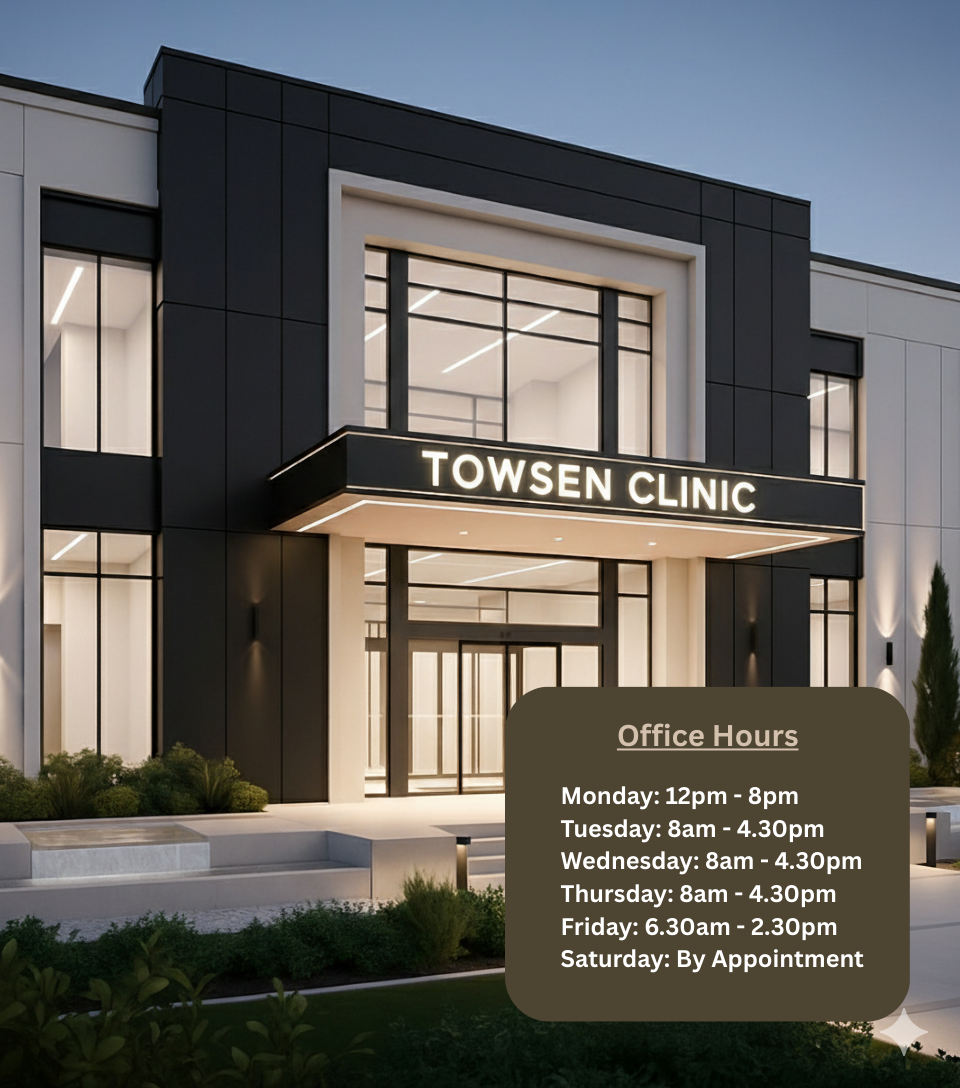
We’re at 795 E Marshall St #303 in West Chester, PA, serving patients across Chester County and the surrounding suburbs.
Breast Augmentation
Mommy Makeover
Eyelid Surgery
Skin Care Treatment
Areas We Serve: West Chester, PA – Exton, PA – Malvern, PA – King of Prussia, PA – Wayne, PA – Glen Mills, PA