

Every method of losing weight costs you some muscle along with the fat. Dieting does it. Bariatric surgery does it. GLP-1 medications like semaglutide and tirzepatide do it too. This is not a flaw specific to the drugs. It is how the body responds to losing weight quickly.
The question that matters is not whether you lose some lean mass on a GLP-1. You will. The question is how much, and whether you can hold most of it. The published trial data shows the muscle loss is real and sometimes meaningful. It also shows that patients who plan for it keep far more of their muscle than patients who do not. The plan is the difference.
This post lays out the framework: protein targets, training, dose pacing, and the supplements that have actual evidence behind them. No vague advice to “eat protein and lift weights.” Specific numbers you can act on.
What the Trial Data Actually Shows
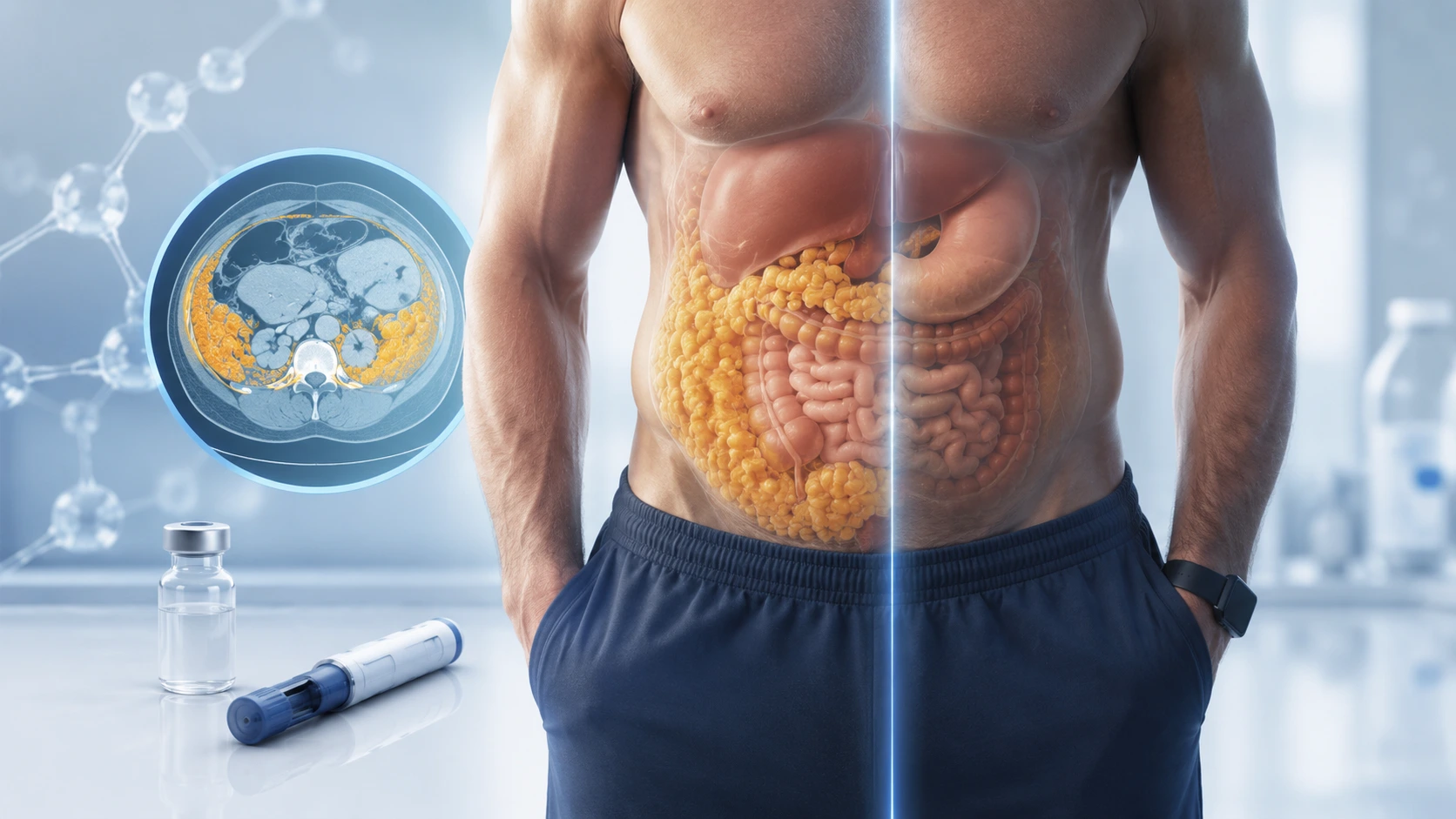
When researchers run body composition scans (DEXA) on patients losing weight with GLP-1 medications, a consistent pattern appears. A portion of the weight lost is lean mass, not fat. The proportion varies by study and by patient, but lean mass loss in the range of a quarter to a third of total weight lost has been reported in body composition substudies of the major trials.
The STEP trial program studied semaglutide for weight management. The SURMOUNT program studied tirzepatide. Both included substudies that measured body composition with DEXA scanning rather than just tracking total weight. Both confirmed that lean mass loss occurs alongside fat loss. This is not a fringe finding or a rumor from fitness forums. It is in the published data.
Here is the part that gets lost in the alarming headlines. Lean mass loss during weight loss is expected for everyone, including people who lose weight through diet alone. Some lean mass loss is appropriate, because a smaller body requires less muscle to move around. The concern is not all lean mass loss. The concern is losing more muscle than necessary, which happens when protein intake is too low and there is no training stimulus to signal the body to keep the muscle it has.
Why Muscle Matters More Than the Scale
For the avatar reading this (a professional in their 40s or 50s who wants to look and feel strong), muscle is not just about appearance. It drives several things that matter for the next several decades.
Muscle is metabolically active tissue. It burns calories at rest. Losing muscle lowers your resting metabolic rate, which makes weight regain easier after you stop the medication. This is part of why some people regain weight rapidly after GLP-1 discontinuation, a pattern we covered in the post on weight regain after GLP-1 medications.
Muscle drives insulin sensitivity. Skeletal muscle is the largest site of glucose disposal in the body. More muscle means better blood sugar control, which feeds back into the metabolic improvements you are after in the first place.
Muscle protects you as you age. The medical term for age-related muscle loss is sarcopenia, and it is one of the strongest predictors of falls, fractures, loss of independence, and mortality in older adults. A 50-year-old who sheds muscle during a weight loss phase and never rebuilds it is borrowing against their future strength.
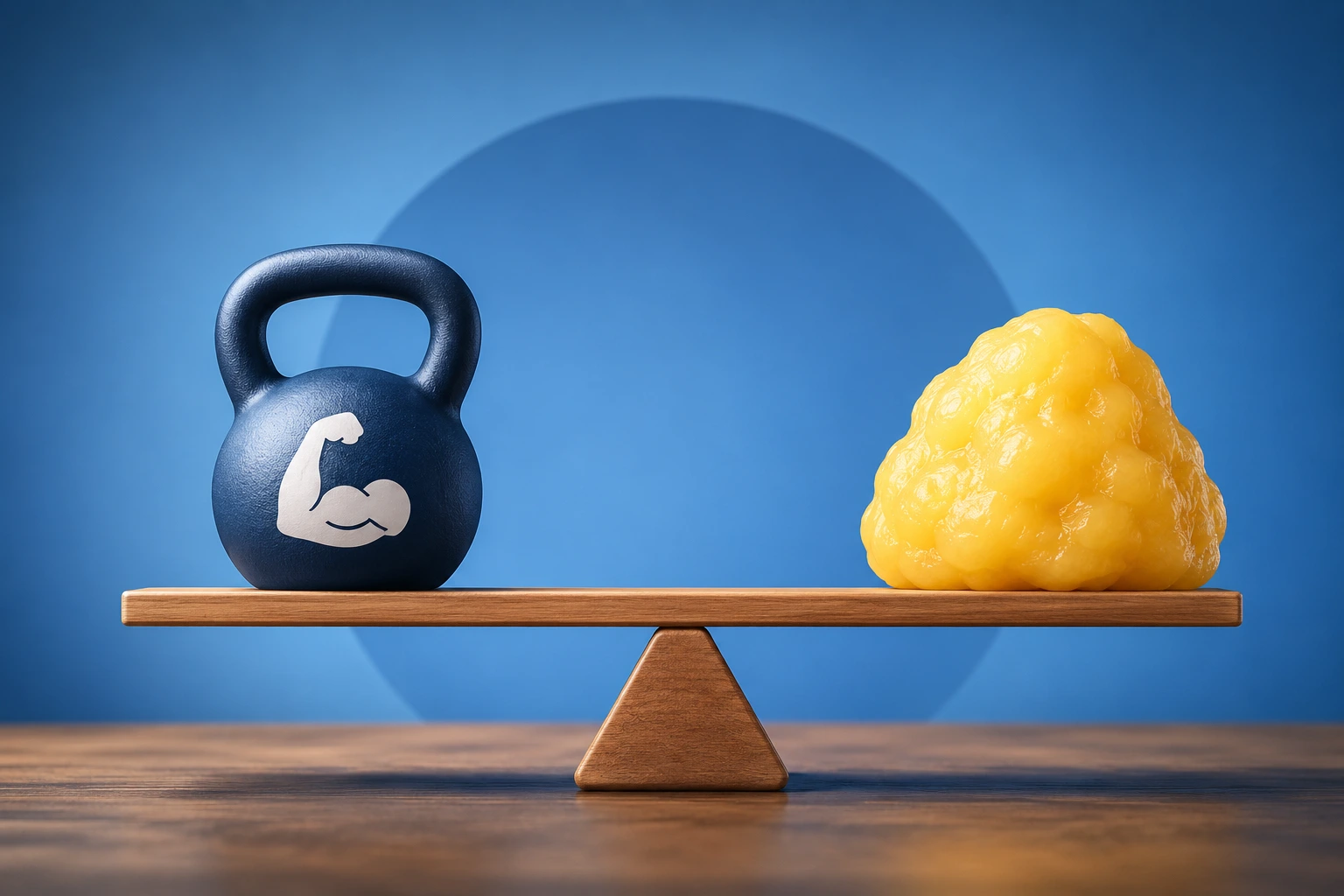
The goal is fat loss with muscle preservation, not weight loss at any cost. The scale number alone cannot tell you whether you are accomplishing that.
Why GLP-1 Patients Are at Higher Risk
GLP-1 medications create two conditions that make muscle loss more likely if you are not deliberate about it.
The first is appetite suppression, which is the whole point of the drug. When your appetite drops sharply, you eat less of everything, including protein. Protein is the macronutrient your body needs to maintain muscle. Many patients on GLP-1 medications drift into eating 40 or 50 grams of protein a day without noticing, far below what muscle preservation requires. The drug makes it easy to under-eat the exact nutrient you most need.
The second is the pace of weight loss. GLP-1 medications can produce faster weight loss than most diets. Faster weight loss tends to come with a higher proportion of lean mass loss, because the body does not have time to adapt gradually. The rapid timeline that makes these drugs appealing also raises the muscle loss risk.
Both of these are manageable. But they have to be managed on purpose. The drug will not do it for you.
The Protein Target
Protein is the single most important lever. The target should be based on your body weight, and specifically on a goal weight or lean body mass rather than your current higher weight.
The International Society of Sports Nutrition position stand on protein supports intakes in the range of 1.4 to 2.0 grams of protein per kilogram of body weight per day for active individuals, with the higher end favored during caloric restriction to preserve lean mass. In pounds, that works out to roughly 0.7 to 0.9 grams of protein per pound of goal body weight.
For a man whose goal weight is 180 pounds, that means roughly 125 to 160 grams of protein per day. For a woman whose goal weight is 140 pounds, that means roughly 100 to 125 grams per day. These are not small numbers, and hitting them while your appetite is suppressed takes planning.
Practical approaches that work for GLP-1 patients: front-load protein earlier in the day before appetite suppression and early fullness make eating difficult, prioritize protein at every meal before other foods, and use protein supplements (whey, casein, or plant-based) to close the gap when whole food intake falls short. Many patients find that a protein shake is easier to get down than a large piece of meat when their appetite is low.
The Training Prescription
Protein gives the body the raw material to keep muscle. Resistance training gives the body the signal that the muscle is needed. Without the training stimulus, the body has little reason to hold onto muscle during a caloric deficit, and protein alone cannot fully compensate.
The minimum effective dose is lower than most people assume. Two to three resistance training sessions per week, hitting all the major muscle groups, is enough to preserve most lean mass during weight loss for someone who is not training for performance. The research on resistance training during caloric restriction consistently shows it reduces lean mass loss compared to dieting without training.
The key principle is progressive overload, which means gradually increasing the demand on the muscle over time (more weight, more reps, or more sets). The body adapts to the demand placed on it. A challenging stimulus tells the body to keep its muscle. An easy stimulus does not.
You do not need a gym membership or fancy equipment. Bodyweight movements, resistance bands, and basic dumbbells can all provide an adequate stimulus for muscle preservation. What matters is that the effort is genuinely challenging and that it progresses over time. Compound movements (squats, presses, rows, hinges) give you the most muscle worked per unit of time, which suits the busy professional schedule.
The Dose Pacing Argument
There is a clinical argument for titrating the GLP-1 dose more slowly than the fastest possible schedule. Slower weight loss tends to preserve more lean mass because the body has more time to adapt. A patient losing weight at a moderate pace, with adequate protein and resistance training, will generally hold more muscle than a patient losing weight as fast as the medication allows.
This is one of the reasons dose decisions should be made with a clinician rather than pushed to the maximum as quickly as possible. The fastest path to a lower scale number is not always the best path to the body composition you actually want. We touched on the broader dosing question in the post on microdosing GLP-1s, and the pacing principle applies to standard dosing too.
Supplements With Actual Evidence
The supplement industry sells a lot of products that promise muscle preservation. A few have real evidence. Most do not.
Creatine monohydrate has the strongest evidence of any muscle-supporting supplement. It supports strength, training performance, and lean mass, and the research base is large and consistent. A standard dose is 3 to 5 grams daily. It is one of the few supplements worth taking during a GLP-1 weight loss phase.
Leucine and the broader category of essential amino acids can help stimulate muscle protein synthesis, particularly for patients struggling to hit protein targets through food. Leucine is the amino acid most directly tied to the muscle-building signal. If you are hitting your total protein target through quality protein sources, additional leucine adds little. If you are falling short, it can help.
Vitamin D and adequate overall nutrition matter for muscle function, especially in older adults. Many people in this demographic are low on vitamin D, and correcting a deficiency supports muscle along with everything else.
Beyond these, most muscle-preservation supplements are not worth the money. Protein, creatine, training, and adequate sleep do the heavy lifting.
The Peptide Question
In selected cases, certain peptides that stimulate the body’s own growth hormone release are part of the conversation for patients focused on body composition during weight loss. Growth hormone secretagogues like sermorelin and ipamorelin are used in some optimization protocols for their potential effects on lean mass and recovery.
This is a more individualized intervention, appropriate for some patients and not others, and it requires clinical evaluation and monitoring. It is not a substitute for protein and training, which remain the foundation regardless. For patients interested in whether peptides fit their situation, the advanced peptide therapy page covers the approach in more detail.
Red Flags You Are Losing Too Much Muscle
A few signals indicate that muscle loss is outpacing what it should during your weight loss phase.
Declining gym performance. If the weights you can handle are dropping steadily, not just plateauing, your body may be losing the muscle behind that strength.
Falling grip strength. Grip strength is a reliable proxy for overall muscle status and is easy to track with an inexpensive hand dynamometer. A steady decline is a warning sign.
Feeling weak in daily activities. Stairs, carrying groceries, and getting up from a chair becoming noticeably harder suggests functional muscle loss.
Body composition shifting wrong on a DEXA scan. If you have access to serial DEXA scans, watching lean mass drop faster than expected is the most direct evidence. This is part of why we favor body composition tracking over scale weight alone, a theme we develop in the post on why BMI is a bad metric.
If you notice these signs, the response is usually more protein, more training stimulus, and sometimes a slower weight loss pace. The fix is rarely to stop entirely.
How Our Program Approaches This
At Towsen Clinic, GLP-1 weight management is built around body composition, not just the scale. The protein target, the training guidance, the dose pacing, and the monitoring are part of the program from the start, because the goal is fat loss with muscle preservation rather than rapid weight loss that leaves you weaker. The full structure is on the weight management therapy page, and for patients specifically on semaglutide, the semaglutide weight loss page covers the protocol details.
If you are on a GLP-1 or considering one and you want to protect your muscle while you lose fat, schedule a consultation and we will build a plan that keeps the strength you have worked for.