

For a long time, low testosterone had essentially one treatment: put testosterone into the body from outside, usually by injection, gel, or pellet. It worked, but it came with trade-offs that were rarely discussed in a standard visit. It shut down the body’s own testosterone production, suppressed fertility, and generally meant lifelong treatment because the natural system did not easily switch back on.
The options in 2026 are broader. Several treatments now exist that raise testosterone without simply replacing it, and some preserve fertility and natural production in ways standard therapy cannot. The right choice depends on your diagnosis, your goals, and where you are in life. This post compares the main options and the logic for choosing between them.
The Diagnosis That Drives the Choice
Before comparing treatments, one distinction matters more than any other: is your low testosterone a problem with the testes themselves, or a problem with the signal that tells them to work?
Primary hypogonadism means the testes have failed. The brain is sending the signal (LH and FSH are normal or high), but the testes cannot respond. In this case, the testes cannot be coaxed into producing more testosterone because the machinery itself is not working. Standard testosterone replacement is usually the appropriate answer.
Secondary hypogonadism means the signal is inadequate. The testes are capable of working, but the brain and pituitary are not sending enough LH and FSH to drive them. This is the more common pattern in the middle-aged professional demographic, and it is the situation where the newer options shine, because if you can restore the signal, the testes will produce their own testosterone.
Telling these apart requires measuring LH and FSH alongside testosterone. A man with low testosterone and low or low-normal LH and FSH has secondary hypogonadism and has more treatment options than a man whose testes have genuinely failed. This is one more reason the full hormone panel matters, a theme we developed in the post on total versus free testosterone.
Standard Testosterone Replacement
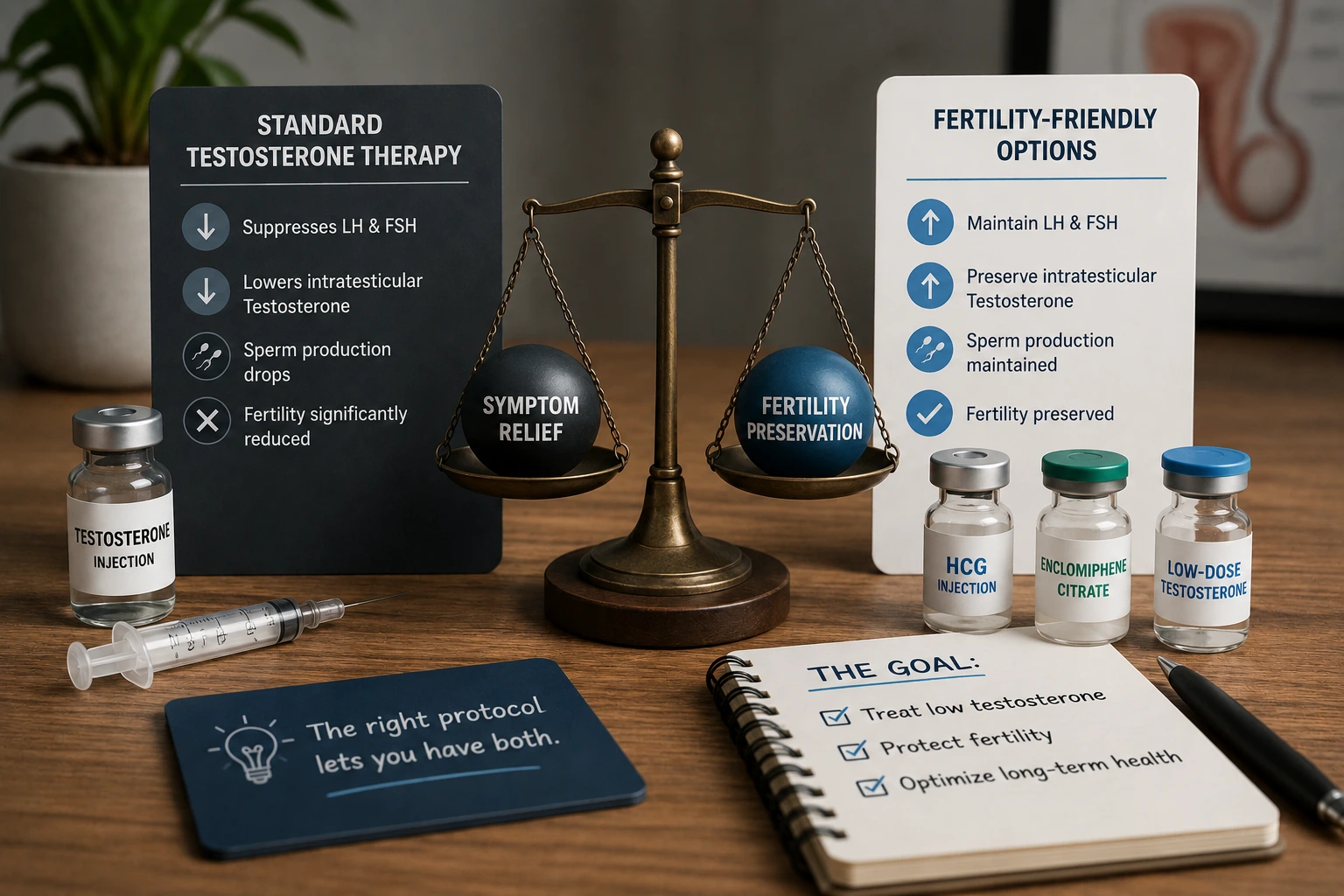
Standard testosterone therapy delivers testosterone directly through injections, topical gels, or implanted pellets. It reliably raises blood testosterone and improves symptoms for most men. It is well-established and, for many men, the right choice.
The trade-off is suppression. When you supply testosterone from outside, the brain detects the higher level and reduces its own signal. LH and FSH fall, the testes stop producing their own testosterone, and sperm production drops, often severely. For men who are not concerned about fertility and want straightforward, reliable treatment, this trade-off is acceptable. For younger men and men who want to preserve fertility or natural production, it is often a dealbreaker. We covered the fertility implications in detail in the post on TRT and fertility.
Standard therapy also generally means lifelong treatment, because once the natural system is suppressed for an extended period, restarting it can be slow and is not guaranteed.
HCG (Human Chorionic Gonadotropin)
HCG mimics LH, the signal that tells the testes to produce testosterone. Instead of replacing testosterone, it drives the testes to make their own. Because it keeps the testes active, it maintains testicular size and preserves the intratesticular environment that sperm production requires.
HCG can be used on its own to raise testosterone in men with secondary hypogonadism while keeping fertility intact. It can also be combined with low-dose testosterone therapy, which brings the benefits of standard therapy while keeping the testes working. This combination is used specifically for men who want the reliability of testosterone therapy but do not want to fully shut down their testicular function.
HCG requires more frequent dosing than some other options and needs clinical management, but it fills a role no other treatment quite matches: keeping the testes active while addressing low testosterone.
Enclomiphene
Enclomiphene works at the level of the brain. It blocks estrogen’s feedback signal at the hypothalamus, which prompts the pituitary to release more LH and FSH. That increased signal drives the testes to produce more of their own testosterone. Because it raises the body’s natural production rather than replacing it, enclomiphene preserves fertility and, in many men, maintains or even improves sperm parameters.
Enclomiphene is the trans-isomer of clomiphene, refined to isolate the component most responsible for raising testosterone while minimizing the estrogenic effects associated with the other isomer. In clinical trials for secondary hypogonadism, enclomiphene raised testosterone to levels comparable with testosterone gel while maintaining sperm counts, whereas the men on gel saw their sperm counts drop. That fertility-preserving profile is its main appeal.
An important accuracy point: enclomiphene is not FDA-approved for any indication. The brand-name version, Androxal, went through FDA review and received Complete Response Letters, with the program ending in 2015. It is available in the United States only through licensed compounding pharmacies, prescribed off-label by a licensed provider. This is a legitimate and common practice, but patients should understand that they are receiving a compounded, off-label medication rather than an FDA-approved product. A responsible clinic explains this clearly.
Combination Protocols
The options above are not mutually exclusive. Several combination protocols exist for specific situations.
Low-dose testosterone plus HCG gives symptom relief from the testosterone while HCG keeps the testes active, preserving testicular size and partial fertility. This suits men who want reliable treatment without full testicular shutdown.
Testosterone plus enclomiphene is used in some cases, though the logic requires careful management since the two work on different parts of the system.
The right combination depends on the individual: their diagnosis, fertility goals, age, response to prior treatment, and lifestyle. There is no single protocol that is best for everyone, which is the entire point of a real evaluation rather than a default prescription.
A Word on SARMs
Selective androgen receptor modulators (SARMs) come up in these conversations because they are marketed online as testosterone alternatives. They are not legitimate clinical options for treating low testosterone outside of research settings. Most are not approved for human use, are sold as “research chemicals” with disclaimers that buyers ignore, and carry real risks including liver toxicity and cardiovascular effects, with no clinical oversight or quality assurance. A man managing low testosterone should not be sourcing SARMs online. The legitimate options above are safer, monitored, and actually appropriate for the goal.
The Decision Matrix
Choosing among these options comes down to a few questions.
What is your diagnosis? Primary hypogonadism (failed testes) generally points to standard testosterone replacement. Secondary hypogonadism (inadequate signal) opens the door to HCG and enclomiphene.
What are your fertility plans? Men who want to preserve fertility lean toward enclomiphene, HCG, or a combination that keeps the testes active, and away from standard testosterone monotherapy. We covered this population specifically in the post on TRT and fertility.
How old are you and what are your long-term goals? A younger man with decades of treatment ahead and family plans has different considerations than an older man who has completed his family and wants straightforward symptom relief.
How have you responded to prior treatment? A man who did not tolerate one approach may do better on another. Switching protocols is possible and sometimes the right move.
Switching Between Protocols
These treatments are not permanent commitments. A man on standard testosterone therapy who develops a desire to preserve fertility can sometimes transition to a fertility-friendly protocol, with a period of adjustment as the natural system restarts. A man on enclomiphene who does not respond adequately may move to another approach. The ability to adjust is part of why working with a clinic that understands all the options matters, rather than one that only offers testosterone injections.
Because estrogen balance intersects with all of these protocols, the estradiol conversation applies here too, which we covered in the post on estrogen in men on testosterone therapy. Some men also ask about how these hormone approaches interact with peptide therapy, which is a separate conversation covered on the advanced peptide therapy page.
How We Approach the Choice
At Towsen Clinic, the treatment decision starts with the diagnosis and the man’s goals, not with a default prescription. The full hormone panel establishes whether the problem is primary or secondary. The fertility conversation happens before treatment, not after. The options are laid out with their trade-offs, and the choice is made together. The full program is on the testosterone replacement therapy page.
If you have low testosterone and want to understand which treatment actually fits your situation, rather than being handed the same injection protocol given to everyone, schedule a consultation and we will work through the options that make sense for you.