Bone Loss After Menopause: Why It Speeds Up and What Helps
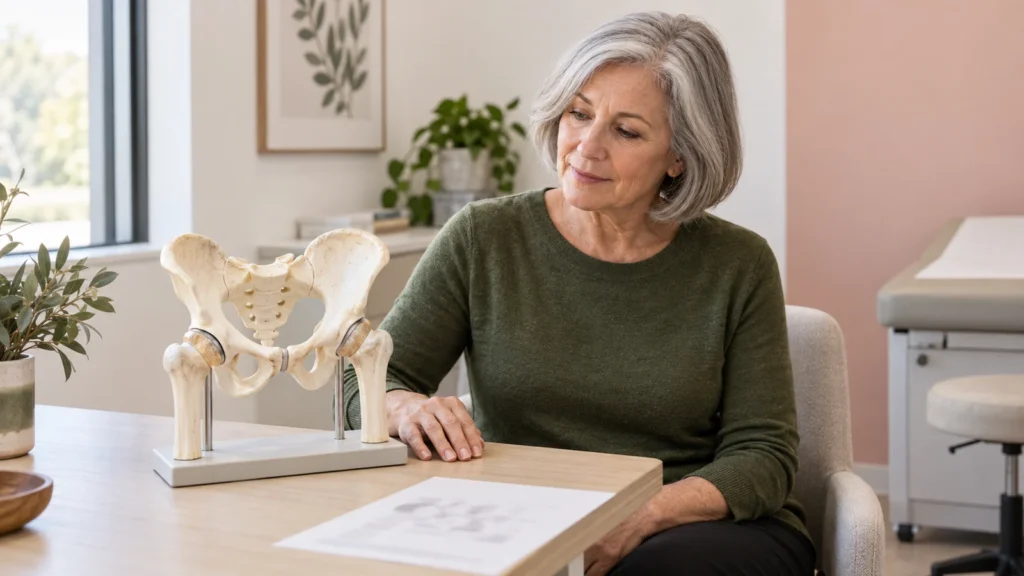
A plain guide to why bones thin faster after menopause, who should get a DXA scan and when, and the everyday steps that help.
Read the article
Injury and Recovery · 6 min read
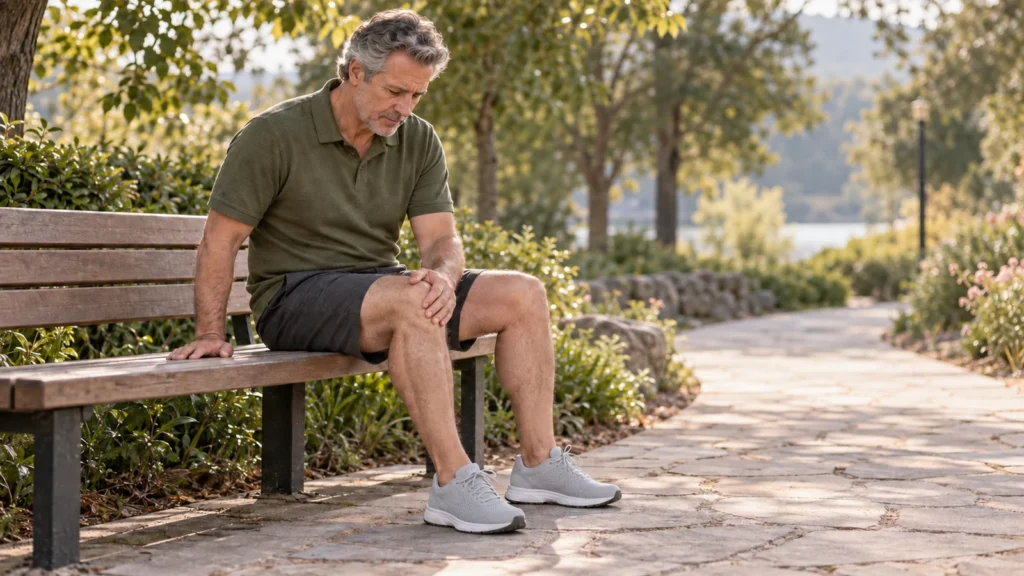
Exercise is a central part of knee pain relief after 40, along with weight loss for people who are overweight. A 2019 guideline from the American College of Rheumatology and the Arthritis Foundation strongly recommends both for knee osteoarthritis.
MedlinePlus, the National Library of Medicine’s health site, lists osteoarthritis, meniscus tears, kneecap pain and tendon problems among the common causes of knee pain.
Yes, walking is one of the best studied exercises for knee osteoarthritis. The 2019 guideline from the American College of Rheumatology strongly recommends exercise, and walking was the most common aerobic exercise in the studies behind it.
The guideline does not pick one best exercise. Walking, cycling, water exercise, tai chi and strength work with weights or bands all appear in its evidence. Supervised programs, often with a physical therapist or in a class, did better than exercise done alone at home.
For knee osteoarthritis, the American Academy of Orthopaedic Surgeons suggests swapping jogging or tennis for swimming or cycling, which put less stress on the knee. The academy’s advice for kneecap pain centers on strength in the front thigh and hip muscles, which work together to steady the kneecap.
A few days of rest suits new knee pain that is mild. MedlinePlus lists rest and ice for knee pain that has just started and is not severe. It also says to call a doctor if the pain lasts past 3 days of home care.
Muscles lose strength fast when they stop working. In a 2008 study, 11 healthy adults with an average age of 67 spent 10 days in bed. Their front thigh muscles lost about 13 percent of their strength.
A 2015 review of five studies with 5,707 people linked weak front thigh muscles with a higher risk of knee osteoarthritis.
The American Academy of Orthopaedic Surgeons advises people with kneecap pain to stop the activities that hurt until the pain goes away. Meanwhile, it suggests low impact exercise, such as a stationary bike or swimming.
For people who are overweight, it does. The 2019 guideline from the American College of Rheumatology strongly recommends weight loss for people with knee osteoarthritis who are overweight or obese.
A 2005 study in the journal Arthritis & Rheumatism followed 142 older adults with knee osteoarthritis who were overweight or obese. It measured the load on their knees during walking. Each pound they lost was linked with about 4 pounds less load on the knee with every step.
The authors noted that this adds up over thousands of steps a day. If extra weight puts more load on your knees, our page on medical weight loss in West Chester, PA describes our physician supervised program.
The American Academy of Orthopaedic Surgeons describes an exam first for osteoarthritis and kneecap pain, often with X-rays, and an MRI only in some cases. It calls MRI the preferred test for a meniscus tear from an injury.
A scan can also find tears that are not causing any pain. A 2008 study in The New England Journal of Medicine scanned one knee in 991 adults aged 50 to 90. Of those with a meniscus tear, 61 percent had no pain, aching or stiffness in that knee in the month before.
The academy says many meniscus tears will not need immediate surgery. A 2016 trial in The BMJ followed 140 middle aged adults with a wear related meniscus tear, almost all without clear arthritis on X-ray. After two years, 12 weeks of supervised exercise and keyhole surgery showed no meaningful difference in knee function.
The 2019 guideline from the American College of Rheumatology strongly recommends against glucosamine for knee osteoarthritis. It says the same about chondroitin, and about pills that combine the two. The guideline reports that the most reliable studies showed no important benefit over a placebo, a pill with nothing active in it.
If you take one now, ask your own doctor about it at your next visit.
MedlinePlus, the National Library of Medicine’s health site, lists these signs as reasons to call your doctor.
Fever with a swollen, painful knee can mean an infection in the joint. MedlinePlus warns that a delay in treatment can cause permanent joint damage.
Pain and swelling in the calf are two signs of a blood clot in a deep vein, per MedlinePlus.
A torn tendon often comes with a pop, and the knee may not straighten afterward. The American Academy of Orthopaedic Surgeons says people who need surgery for this do better when it happens soon after the injury.
Adrienne Towsen, MD, is a board certified orthopedic surgeon. The American Board of Orthopaedic Surgery certified her in 2006. Her training includes an orthopedic surgery residency at Allegheny General Hospital and a sports medicine fellowship at Thomas Jefferson University Hospital.
She no longer performs surgery, and we do not do injections or physical therapy here.
Our work focuses on injury prevention and joint health, drawing on her orthopedic background. We look at how you move, how you train and how you sleep. Lab work can include hormone panels, metabolic markers, inflammatory markers, thyroid and body composition.
Her own published focus is “maximizing musculoskeletal potential and injury prevention”.
The clinic is at 795 East Marshall Street, Suite 303 in West Chester. It is on the third floor of the North Hills Medical Building, next door to Chester County Hospital. Patients come in from Exton, Malvern, Glen Mills, Wayne, King of Prussia and Newtown Square.
If your knee has hurt for weeks, one appointment is worth booking. Our page on injury prevention and performance medicine in West Chester explains how we build recovery plans around training load and sleep.
A first visit is 60 to 90 minutes, costs $295 and includes a physical exam. Our page on how the first visit works lists the steps.
Call (484) 803-5448 to book.
A plain guide to why bones thin faster after menopause, who should get a DXA scan and when, and the everyday steps that help.
Read the article
Aching joints are one of the most common complaints around menopause. This guide covers the estrogen link, other causes to rule out, what helps,
Read the article
Muscle, tendons, sleep and hormones all change after 40. This guide explains the research on each change, what helps recovery, and which signs need
Read the articleBook a visit at our West Chester office and bring your questions.
Book a consultation