

There is a piece of advice that circulates on testosterone forums and gets repeated in some clinics: estrogen is the enemy, so drive it as low as possible. Men starting testosterone therapy hear that high estrogen causes water retention and breast tissue growth, they get prescribed an aromatase inhibitor like anastrozole to block estrogen production, and some of them push the dose until their estradiol falls below the male reference range. A subset are dosing anastrozole on their own, based on advice they read online.
The result is often a man who feels worse than he did before treatment. Aching joints, flat mood, low libido despite good testosterone levels, and over time, declining bone density and worse cardiovascular markers. The cause is not too much estrogen. It is too little. Estrogen in men is not a side effect to eliminate. It is a hormone the male body genuinely needs, and crashing it causes real harm.
This post explains what estradiol does in men, why the goal of near-zero estrogen is wrong, and when aromatase inhibition is actually appropriate.
What Estradiol Does in the Male Body
Estradiol (the main form of estrogen, often written E2) is usually thought of as a female hormone. Men have it too, in smaller amounts, and it does essential work.
Bone density depends on estradiol. In men, estradiol is one of the primary regulators of bone maintenance. Low estradiol accelerates bone loss and raises fracture risk over time. This is one of the better-documented effects of estrogen in men, and it is a slow, silent process that a man crashing his estradiol will not feel until damage has accumulated.
Libido and sexual function depend on estradiol. Many men are surprised to learn that low estradiol, not just low testosterone, can tank libido and erectile function. A man with excellent testosterone levels and crushed estradiol often has worse sexual function than he did before treatment, and he cannot understand why because his testosterone looks great.
Joint health depends on estradiol. Estradiol has anti-inflammatory effects in joint tissue. Men who crash their estradiol frequently develop aching, stiff joints. This is one of the most common complaints from men who are over-suppressing estrogen, and it often resolves when estradiol is allowed to return to a normal range.
Mood and cognition are affected by estradiol. Low estradiol in men is associated with low mood, anxiety, and irritability. Some men chasing a “high testosterone, low estrogen” ideal end up depressed and cannot figure out the source.
Lipid metabolism and cardiovascular markers are influenced by estradiol. Estrogen has effects on cholesterol handling and vascular function in men. Crashing estradiol can worsen the cardiovascular risk picture that testosterone therapy is partly meant to help.
The landmark study on this topic by Finkelstein and colleagues, published in the New England Journal of Medicine, separated the effects of testosterone and estradiol in men. It demonstrated that estradiol, produced when testosterone converts through the aromatase enzyme, is responsible for a meaningful portion of the benefits men attribute to testosterone, including effects on body composition and sexual function. The study made clear that estradiol is not an unwanted byproduct. It is part of how testosterone therapy works.
The Aromatase Enzyme Is Not Your Enemy
Aromatase is the enzyme that converts a portion of testosterone into estradiol. It is present in fat tissue, the brain, bone, and other sites. When you take testosterone, some of it converts to estradiol through this enzyme, which is exactly what is supposed to happen.
An aromatase inhibitor (anastrozole, letrozole) blocks this enzyme, reducing the conversion and lowering estradiol. The mistake is treating this conversion as a problem to be shut down rather than a normal process to be kept in balance. Blocking aromatase aggressively does not optimize anything. It creates an estrogen deficiency, and estrogen deficiency in men carries the consequences listed above.
The Real Male Estradiol Range
Men have a normal reference range for estradiol, and the target on testosterone therapy is to keep estradiol within a healthy range, not to push it to the floor. The right range for a man is well above zero and well above “as low as possible.” A man whose estradiol sits comfortably in the normal male range, in proportion to his testosterone level, generally feels and functions best.
The ratio of testosterone to estradiol matters more than either number in isolation. As testosterone rises on therapy, some rise in estradiol is normal and appropriate. The goal is proportion, not suppression. A man with high testosterone and proportionally normal estradiol is in a good place. A man with high testosterone and crushed estradiol is not, even though the second man’s bloodwork might look “cleaner” to someone who believes estrogen is bad.
Symptoms of Low Estradiol That Men Misread
Here is the trap. Many symptoms of low estradiol overlap with symptoms men associate with needing more testosterone. So a man with crashed estradiol thinks the answer is more testosterone or more estrogen suppression, when the actual fix is to let estradiol come back up.
Symptoms of low estradiol in men include aching or stiff joints, low libido despite good testosterone, difficulty with erections, anxiety and low mood, fatigue, dry skin, and trouble sleeping. A man reading that list might assume his testosterone dose is too low. If his testosterone is already good and his estradiol is crashed, more testosterone is not the answer. Restoring estradiol is.
This is why interpreting symptoms requires knowing the full hormone picture, including estradiol measured with a sensitive assay. We covered the importance of reading the full panel in the post on total versus free testosterone.
The Symptoms of High Estradiol Are Often Overstated
The fear of high estradiol is often out of proportion to the actual risk. The symptoms attributed to high estradiol (water retention, breast tissue sensitivity, gynecomastia) are real but less common than forum culture suggests, and they generally occur only when estradiol is genuinely and substantially elevated, not when it sits at the upper end of normal.
Water retention can occur with high estradiol, but it is also caused by other factors and is often mild. Breast tissue sensitivity and gynecomastia (actual breast tissue growth) generally require estradiol to be substantially elevated for a prolonged period, not just slightly above the middle of the range. Many men who blame estrogen for these symptoms have estradiol levels that do not actually warrant intervention.
The point is not that high estradiol never matters. It is that the reflexive fear of any estradiol elevation leads men to over-treat a problem they often do not have, creating a worse problem in the process.
When Aromatase Inhibition Is Actually Appropriate
There are men who genuinely need aromatase inhibition. The key is that it should be driven by confirmed, symptomatic estradiol elevation, not used preventively or reflexively.
A man with estradiol that is genuinely and substantially elevated on testing, combined with real symptoms of high estradiol (significant water retention, breast tissue changes), may benefit from carefully dosed aromatase inhibition. The emphasis is on confirmed elevation plus symptoms, and on careful dosing.
The dosing problem is significant. Standard anastrozole tablet sizes are often far too strong for the modest adjustment most men need. A full tablet can crash estradiol below the normal range. This is why careful clinics use much smaller doses, alternate-day or twice-weekly dosing, and retest to confirm the estradiol landed in the right range rather than the floor. Aromatase inhibition is a precision adjustment, not a blunt instrument.
What a Careful TRT Clinic Does Instead
At Towsen Clinic, the approach to estradiol on testosterone therapy is built around keeping it in a healthy range, not eliminating it. That means measuring estradiol with a sensitive assay, interpreting it in proportion to testosterone, and reserving aromatase inhibition for men with confirmed symptomatic elevation rather than prescribing it by default.
Most men on well-managed testosterone therapy do not need an aromatase inhibitor at all. When testosterone dosing is reasonable and delivery is steady, estradiol usually settles into a normal range on its own. The men who do need aromatase inhibition need it dosed carefully and monitored, not pushed until their estrogen disappears.
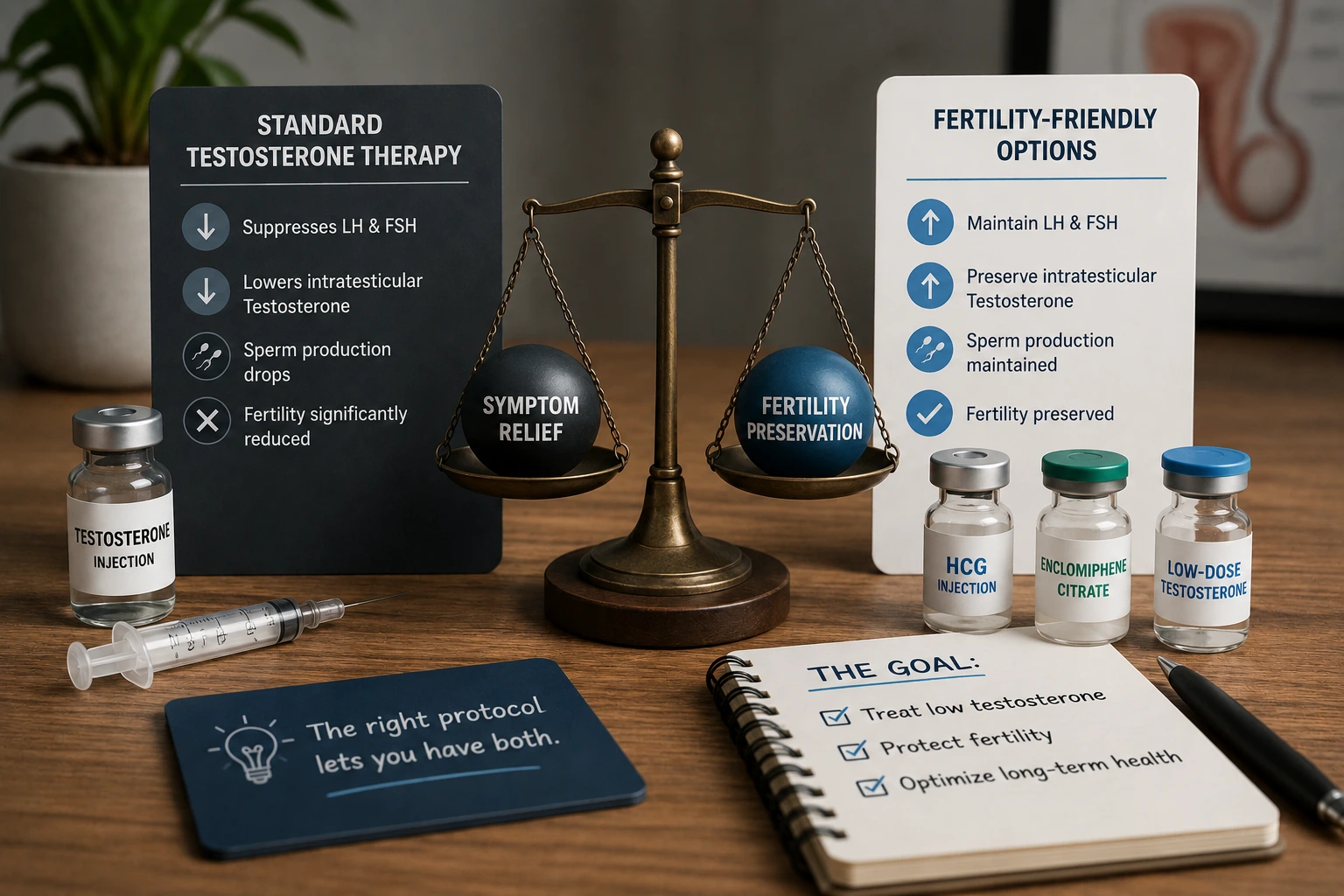
This connects to the broader philosophy of how testosterone therapy should be managed, which we covered in the post on testosterone optimization for men over 40. It also connects to the fertility conversation, since some of the same tools intersect, which we covered in the post on TRT and fertility and the comparison of testosterone options in the post on HCG, enclomiphene, and testosterone choices. The full program is detailed on the testosterone replacement therapy page.
The Bottom Line
If you are on testosterone therapy and feel worse than you expected (aching joints, low libido, flat mood) while your testosterone looks good, crashed estradiol is a likely culprit. Estrogen in men is essential for bone, joints, libido, mood, and cardiovascular health. The goal is a healthy estradiol range, not the lowest possible number.
If you are taking an aromatase inhibitor and suspect your estradiol has been driven too low, or if you are being told to suppress estrogen preventively, schedule a consultation and we will check where your estradiol actually is and whether the current approach is helping or hurting.