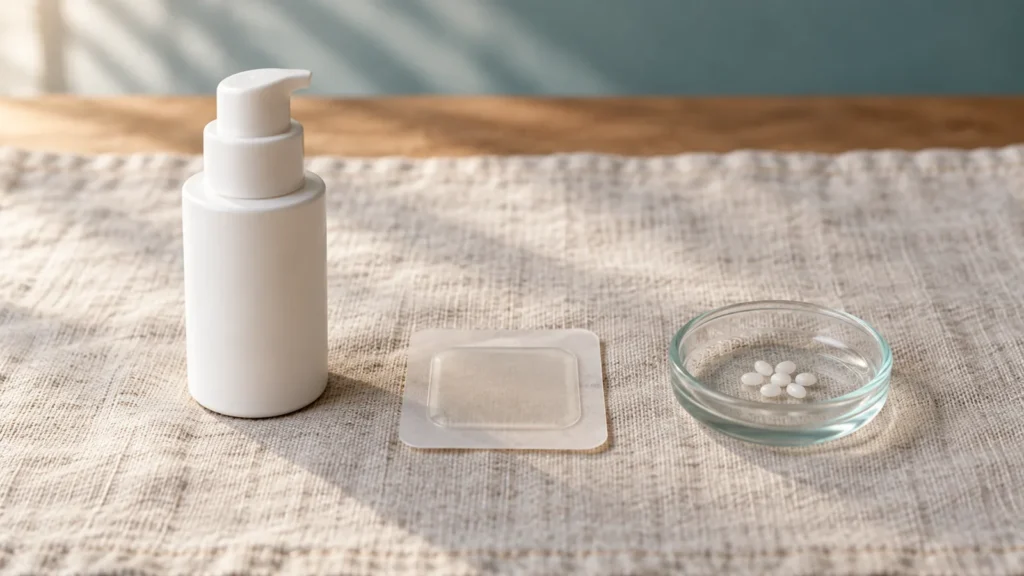
Hormone Pellets vs Creams vs Patches: How They Differ
A plain guide to hormone pellets, creams, gels, patches and pills: how each one delivers a dose and which forms the FDA has approved.
Read the article
Hormone Optimization Therapy · 5 min read
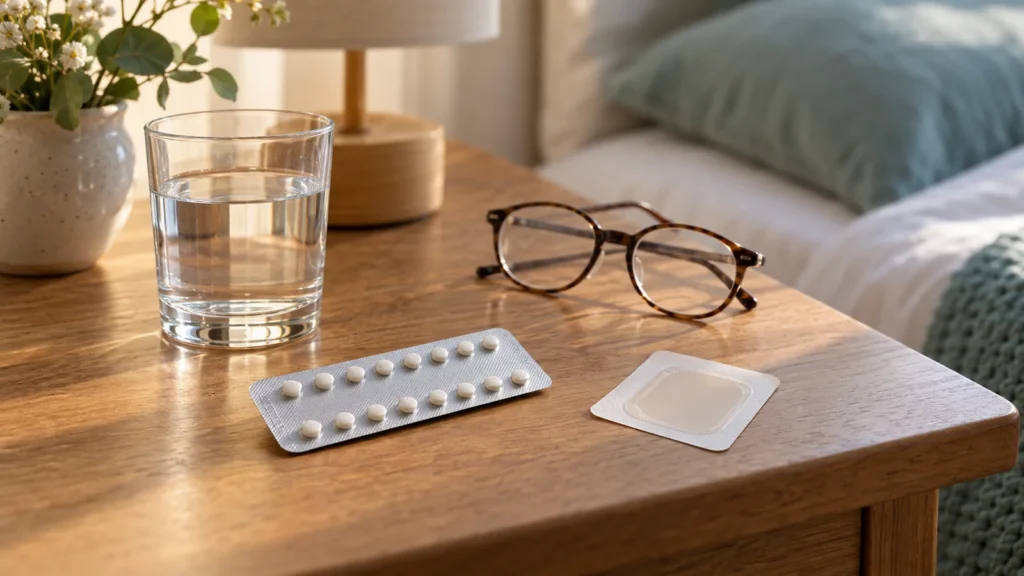
Birth control pills prevent pregnancy. Hormone therapy for menopause, often called HRT, treats symptoms such as hot flashes, and preventing pregnancy is not one of its approved uses. Both points come from the FDA labels for these medicines.
The birth control vs HRT question comes up in perimenopause. The American College of Obstetricians and Gynecologists (ACOG) defines that as the years leading up to menopause.
Combined birth control pills contain two hormones, estrogen and progestin, ACOG says. They prevent pregnancy mainly by stopping ovulation, the release of an egg from an ovary. They may also make periods more regular, lighter and shorter, ACOG adds.
Hormone therapy can help relieve the symptoms of perimenopause and menopause, ACOG says. It means taking estrogen, plus a progestin for a woman who has a uterus.
The FDA label for one menopause tablet lists two uses: moderate to severe hot flashes due to menopause, and preventing osteoporosis after menopause. Preventing pregnancy is not on that list.
Birth control pills contain a progestin, which ACOG defines as a “synthetic form of progesterone,” in place of progesterone. Hormone therapy can use a progestin or progesterone. The Menopause Society calls progesterone “the progestogen the body produces naturally,” and our post on progesterone and progestin explains how the two differ.
For a woman with a uterus, the FDA says estrogen raises the chance of cancer of the uterine lining, and adding progestin lowers that risk.
Three FDA labels on DailyMed list these amounts.
Progesterone and progestin are different medicines, so each label states its own amount. None of the three compares its dose with another. Other brands differ, so ask your prescriber about your own label.
Yes. “Even when menstrual cycles are irregular, women in perimenopause can still get pregnant,” The Menopause Society says. The ovaries release an egg less often in those years, it explains.
Menopause “can’t be confirmed until one year after a woman’s final menstrual period,” the National Institute on Aging says. A woman who does not want to get pregnant should use birth control for at least 12 months after her last period, it advises.
The CDC’s 2024 contraception guidance says birth control is needed after age 44 too, for anyone who wants to avoid pregnancy. It notes that ACOG and the North American Menopause Society recommend it until menopause or age 50 to 55.
“Do not stop taking your birth control even if you have a positive result from a menopause home test kit,” the FDA says.
The FDA label for combined birth control pills has a boxed warning about smoking. “Cigarette smoking increases the risk of serious cardiovascular events from combination oral contraceptive (COC) use,” it reads. Doctors should counsel patients that “women who are over 35 years old and smoke should not use COCs,” the label adds.
The same label rules out the pill for women with blood clots, breast cancer, liver tumors or unexplained vaginal bleeding, among other conditions. The CDC’s 2024 criteria call migraine with aura an “unacceptable health risk” with combined birth control.
“Menopause hormone therapy is not for everyone,” the FDA says. “Like all medicines, hormone therapy has benefits and risks.”
“For some women, hormone therapy may increase their chances of getting blood clots, heart attacks, strokes, breast cancer, and gall bladder disease,” the FDA says.
According to the FDA, hormone therapy for menopause is not for women who:
The FDA also says many products sold as “bioidentical hormones” are compounded drugs, and compounded drugs are not FDA approved. It has approved drugs with hormones identical to the ones women’s bodies make in their reproductive years.
The right approach depends on your symptoms, your family and medical history and your preferences, the National Institute on Aging says.
For a woman who has periods and hot flashes, The Menopause Society says combined birth control is often used. That is “especially helpful when birth control is needed as well,” the society says.
After menopause a woman can no longer get pregnant, the National Institute on Aging says. From then on the question is symptom care, and the institute lists hormones as one option.
Your prescriber sets the timing. The FDA says to speak with your health care provider about when to stop birth control.
Towsen Clinic provides hormone therapy for perimenopause and menopause at 795 East Marshall Street in West Chester. You work with Dr. Adrienne Towsen, MD, directly.
A first visit is 60 to 90 minutes and costs $295. Lab work is part of care, and she personally reviews your lab results before a results visit. Our page on how the first visit works lists each step.
Your gynecologist or primary care doctor prescribes birth control. Bring a list of everything you take to your first visit, including the name and dose of any birth control.
For symptom care, our page on bioidentical hormone therapy in West Chester, PA explains the forms we offer and each step of care.
Call (484) 803-5448 to book.
A plain guide to hormone pellets, creams, gels, patches and pills: how each one delivers a dose and which forms the FDA has approved.
Read the article
What a thyroid antibodies test checks, what a positive result means for Hashimoto's disease, and what happens next.
Read the article
What a men's health doctor checks, which screenings come at which age, the symptoms worth a visit, and how to get ready for one.
Read the articleBook a visit at our West Chester office and bring your questions.
Book a consultation