Birth Control vs HRT in Perimenopause: How They Differ
Birth control pills prevent pregnancy and hormone therapy treats menopause symptoms. See how the two differ and when women move from one to the
Read the article
Hormone Optimization Therapy · 5 min read
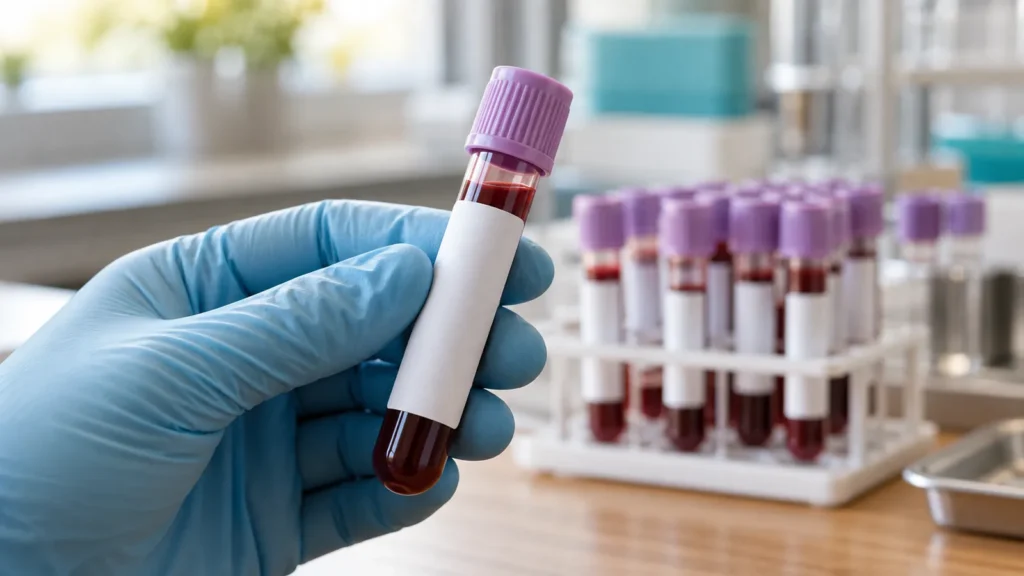
A thyroid antibodies test is a blood test that checks whether your immune system is attacking your thyroid. It looks for an autoimmune thyroid disease such as Hashimoto’s disease, says MedlinePlus, the health site of the National Library of Medicine.
A positive result alone does not mean your thyroid is underactive. Thyroid hormone levels can be normal while antibodies are high, according to the American Thyroid Association.
Antibodies are proteins that your immune system makes to fight germs, MedlinePlus explains. Sometimes the body makes antibodies by mistake, and they attack its own healthy tissue.
Your thyroid is a small, butterfly-shaped gland in the front of your neck. Its hormones control how your body uses energy, says the National Institute of Diabetes and Digestive and Kidney Diseases, or NIDDK.
MedlinePlus lists four types of thyroid antibodies that a blood test can check.
Graves’ disease is the most common cause of an overactive thyroid, NIDDK says. TPO antibodies can show up with either disease, according to MedlinePlus.
A positive TPO or thyroglobulin result may mean you have Hashimoto’s disease, MedlinePlus says. Most people with Hashimoto’s disease have high levels of one or both. Higher antibody levels make an autoimmune thyroid disorder more likely, the same page says.
Not on its own. TSH and free T4 are the tests that show how your thyroid is working, the American Thyroid Association says.
A doctor can diagnose Hashimoto’s disease when antibodies are high, thyroid hormone levels are normal and you have no symptoms, the association explains. Many people with the disease have no symptoms at first, NIDDK adds.
Hormone levels are a different question from antibodies. Our post on a normal TSH with thyroid symptoms covers that side.
With a negative result, your thyroid symptoms are probably not caused by an autoimmune disease, MedlinePlus says. If a doctor suspects Hashimoto’s disease anyway, NIDDK says you may have an ultrasound of your thyroid.
Hashimoto’s disease is an autoimmune disorder that can cause an underactive thyroid, which doctors call hypothyroidism. The immune system makes antibodies that attack the thyroid, NIDDK explains, and the damaged gland cannot make enough thyroid hormone.
NIDDK says the number of Americans with Hashimoto’s disease is unknown. The disease is the most common cause of hypothyroidism, which affects about 5 in 100 Americans, per the same page.
These groups are more likely to get it, according to NIDDK.
As the disease progresses, you may have symptoms of hypothyroidism, NIDDK says. Common ones include fatigue, weight gain, trouble with cold, joint and muscle pain, constipation, and dry skin or thinning hair.
The next step depends on your thyroid hormone levels. With high antibodies and normal TSH and free T4, you do not need thyroid hormone treatment, the American Thyroid Association says.
Your doctor may check your symptoms and thyroid hormone levels regularly instead, according to NIDDK. The association says to monitor your TSH, because low thyroid hormone levels can develop over time. It adds that repeating the antibody test is not needed.
Levothyroxine is the recommended way to treat hypothyroidism, NIDDK says. It is a medicine identical to T4, a hormone the thyroid makes. Most people with hypothyroidism from Hashimoto’s disease need it for life, according to the American Thyroid Association.
Researchers are looking at how diet and supplements such as vitamin D and selenium may affect Hashimoto’s disease. No specific guidance is currently available, NIDDK says.
NIDDK does warn about iodine. Large amounts, from seaweed such as kelp or from iodine supplements, may cause hypothyroidism or make it worse in people with Hashimoto’s disease.
Ask your doctor before you take an iodine supplement. In pregnancy you need enough iodine, NIDDK says, so ask how much.
A doctor may order it when other thyroid blood tests suggest thyroid disease, NIDDK says. MedlinePlus says you may need it with symptoms of Hashimoto’s or Graves’ disease and thyroid hormone results that are too high or too low.
MedlinePlus also lists family history and other autoimmune conditions as risk factors. Ask your doctor about the test in any of these cases.
The test needs no special preparation, MedlinePlus says.
At our clinic at 795 East Marshall Street, we check your thyroid as part of your hormone workup. Depending on your case, the panel can include TSH, free T4, free T3, reverse T3 and thyroid antibodies.
We order thyroid antibodies when indicated, and the two we test are TPO antibodies and thyroglobulin antibodies. Adrienne Towsen, MD, reviews your lab results with you herself. If your results and your symptoms point to a thyroid problem, we treat it.
A first visit is 60 to 90 minutes and costs $295. Our page on how the first visit works lists each step.
Gather any past thyroid lab results and write down your symptoms. Take both to your doctor, or to a first visit with us.
See a doctor soon if you are pregnant and have thyroid disease or symptoms of it. MedlinePlus says to get tested as soon as you know you are pregnant.
Our page on hormone therapy in West Chester, PA has a thyroid section that explains what we test and how treatment fits your plan.
Call (484) 803-5448 to book a first visit.
Birth control pills prevent pregnancy and hormone therapy treats menopause symptoms. See how the two differ and when women move from one to the
Read the article
A plain guide to hormone pellets, creams, gels, patches and pills: how each one delivers a dose and which forms the FDA has approved.
Read the article
What a men's health doctor checks, which screenings come at which age, the symptoms worth a visit, and how to get ready for one.
Read the articleBook a visit at our West Chester office and bring your questions.
Book a consultation